AI & ML
The Future of Generative AI in Enterprise Solutions
A
Admin User
Software Engineer @ Data Silicon
August 01, 2026
2 min read
The AI Shift in Enterprise
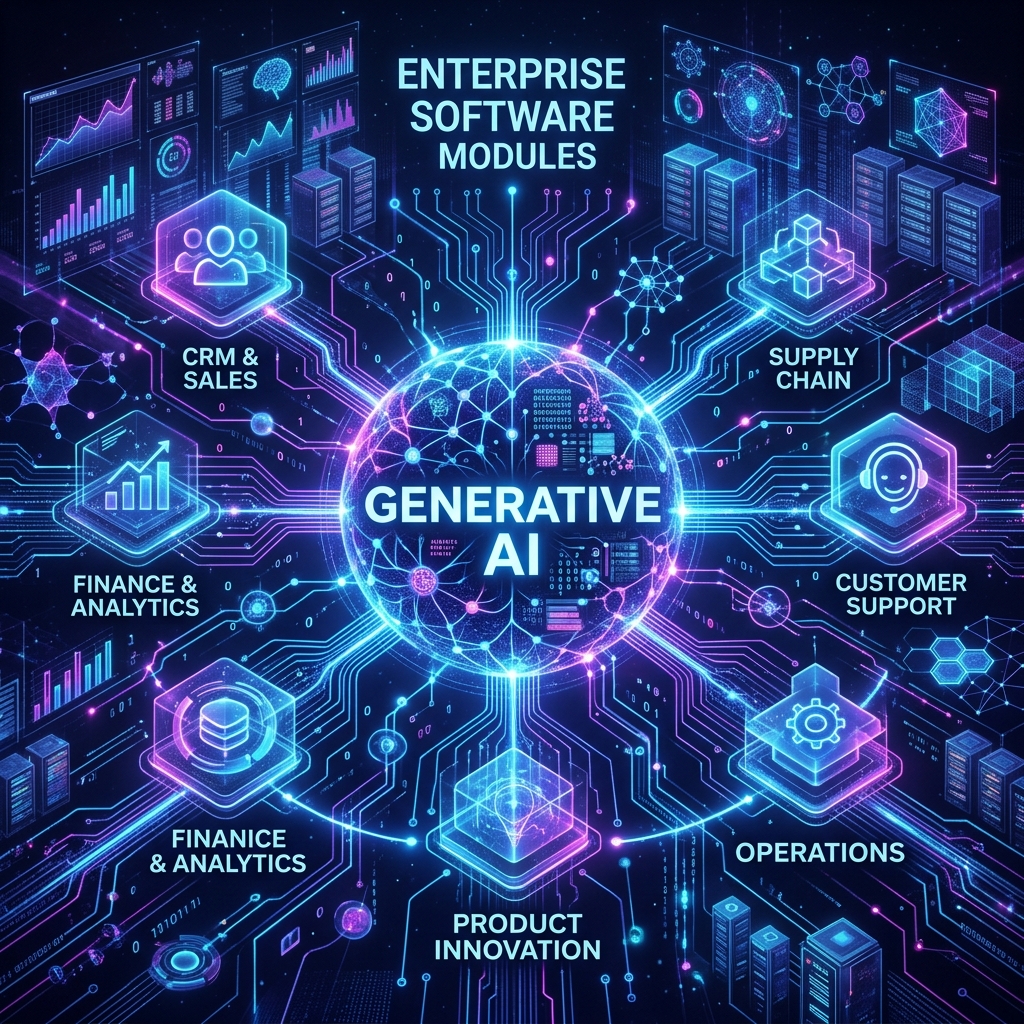
Over the past few years, Generative Artificial Intelligence (AI) has shifted from a novelty to a fundamental driver of business innovation. Large Language Models (LLMs) and advanced ML pipelines are no longer just chat interfaces; they are becoming the core intelligence engines powering modern enterprise applications.
Key Areas of Transformation
- Automated Content & Document Analysis: Businesses process millions of documents daily. Generative AI models can read, synthesize, and extract key metrics from legal contracts, financial sheets, and invoices in seconds, reducing operational overhead.
- Cognitive Automation & Support: Virtual agents are now capable of complex multi-step reasoning, resolving over 60% of tier-1 customer inquiries without human intervention.
- Productivity and Code Generation: Automated code assistants help software teams write code up to 40% faster, improving product development lifecycles significantly.
Implementation Best Practices
When integrating AI into your enterprise workflow, keep the following considerations in mind:
- Security & Privacy: Ensure client data is never leaked or used to train public models. Run local or VPC-hosted LLMs when working with sensitive client information.
- Accuracy and Hallucinations: Implement robust prompt engineering, retrieval-augmented generation (RAG), and validation pipelines to prevent false information generation.
- Scalability: Leverage serverless AI compute providers and cache frequent embedding queries to manage costs and latency.
Conclusion
The enterprises that successfully integrate Generative AI into their core operations today will gain an insurmountable lead in productivity, customer satisfaction, and operational speed. Data Silicon is dedicated to helping businesses navigate this transition smoothly.
Category:
AI & ML
Tags:
Share: